

|
Getting your Trinity Audio player ready...
|
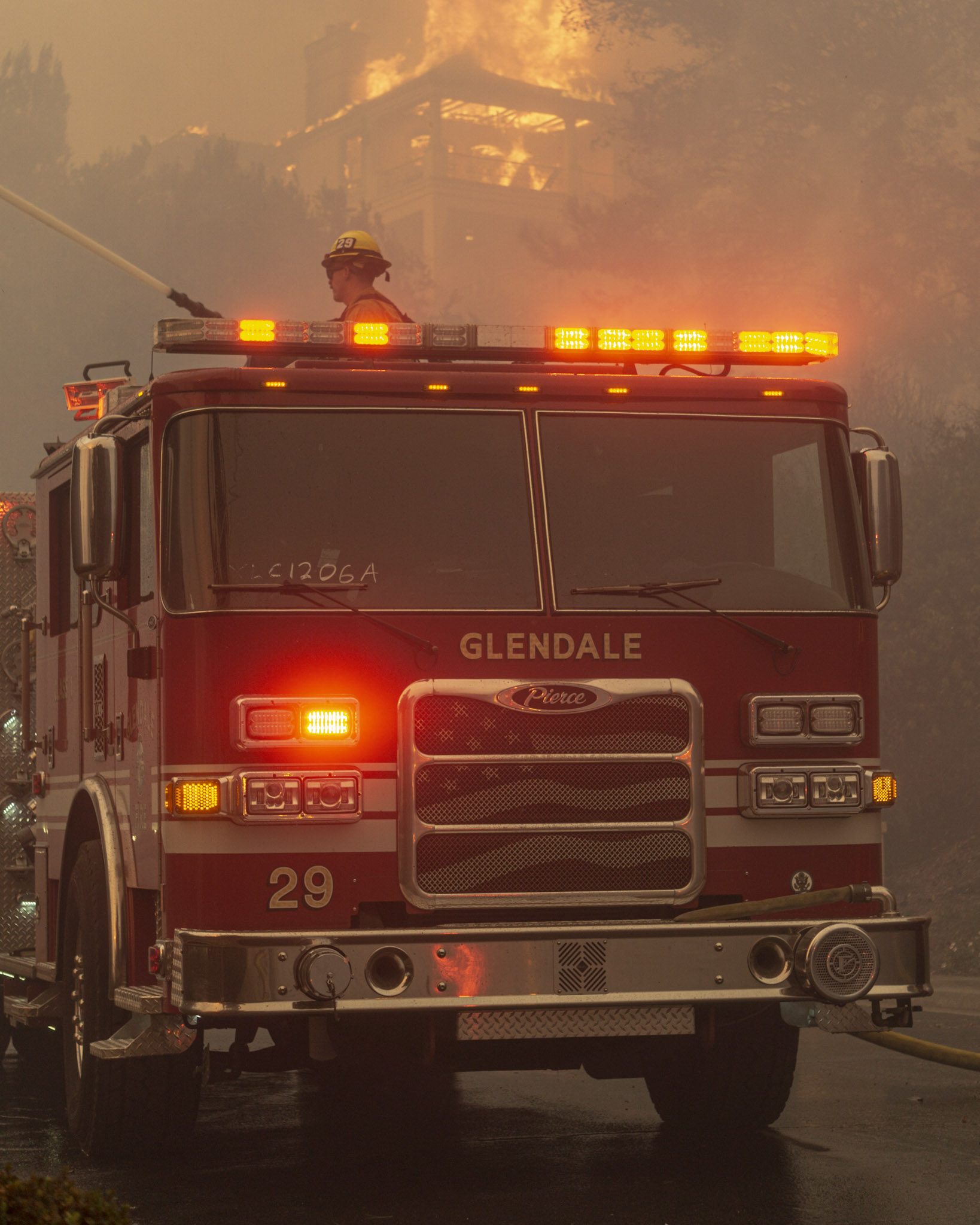
The January 7th, 2025, wildfires that struck Pacific Palisades and Altadena will certainly go down in fire history books.
Everyone involved did an incredible job even against all odds. Sometimes things are just out of our control.
Even if my math and stats are off a bit (there are conflicting reports on totality), but I think you’ll get the message. If you placed 100 additional engines on these two fires, I believe the outcome would not change. The Pacific Palisades lost 5,300 structures from the fire. The Altadena fire lost over 7,000 structures. Between the two, 12,300 structures were destroyed by fire.
Most fire department policies require at least three engines, one truck, one paramedic unit and one Battalion Chief to respond and effectively extinguish a residential structure fire. Policies requiring commercial structure fire responses generally require a minimum of four engine two trucks, paramedic, and battalion chief. Often, when the first arriving unit gets on scene and it is a working fire, additional resources are requested.
The numbers totaled approximately 12,300 structures burning during the duration of these fires. If these 12,300 structures burning on a normal structure response it would have taken at least 36,900 engines to fight and extinguish all of these structures burning. This does not factor in the resources (air support/hand crews/dozers/water tenders etc.) needed to fight the wildfires which were fanned anywhere from fifty to one hundred mile per hour winds. Not to mention, many structures burning were commercial buildings which would have required additional resources.
If you had the 36,900 engines on scene, and all were staffed with a minimum of three personnel on each engine (again conservative), it would have required at least over 110,700 personnel to protect and fight these structures fires. Again, conservative numbers.
Factor in Non-Wildfire Related Calls During the Wind Event
Agencies throughout the southland also responded to thousands of additional wind related calls, structure fires, wires and trees down and medical calls. Calls went up significantly during this time. Not to mention the other brush fires that developed throughout Southern California.
Simply put, agencies were way outgunned by the force of Mother Nature and stretched beyond their capacity. Does this require a change in policy in the way we operate? Without a doubt, all after action reports will make us re-evaluate and adjust policies from the lessons learned. As Gordon Graham would say, this is a low frequency, high impact event. An event that also cost the Los Angeles City Fire Departments top brass job. We were fortunate more fires such as these two did not occur.
Fit For Duty. As firefighters we feel a loss when we do not make a save. These incidents take a toll on first responders mentally and physically. Fires like these are on the rise and not going away but will be increasing. Is your agency and personnel prepared?
As first responders we train often and are able to handle most incidents we encounter. We are quick to take control of incidents. We are proud of it. It gives us a sense of internal security. It’s important to remember that no agency has total control. These fires demonstrated that. It was out of control. We plan extensively, and times like this – things do not turn out the way we anticipate. As much as we’d like to, we can’t predict how the storms will go. Make sure you have the right training, policies and peer support in place to effectively train, respond and deal with post incidents such as these.
It’s important to know, everyone involved did the best they could with what they had. You did a great job – be proud of yourselves! You may want to share this with your city officials, community members, media, and others that there are times when things go beyond our capability.
Fire Chief Sam DiGiovanna
Sam DiGiovanna is a 40-year fire service veteran. He started with the Los Angeles County Fire Department, served as Fire Chief at the Monrovia Fire Department, and currently serves as Chief at the Verdugo Fire Academy in Glendale. He is Director at Large with the California State Firefighters Association, Associate Director for the California Training Officers Association and a consultant for www.Lexipol.com