

|
Getting your Trinity Audio player ready...
|
By David Santos, Colton FD
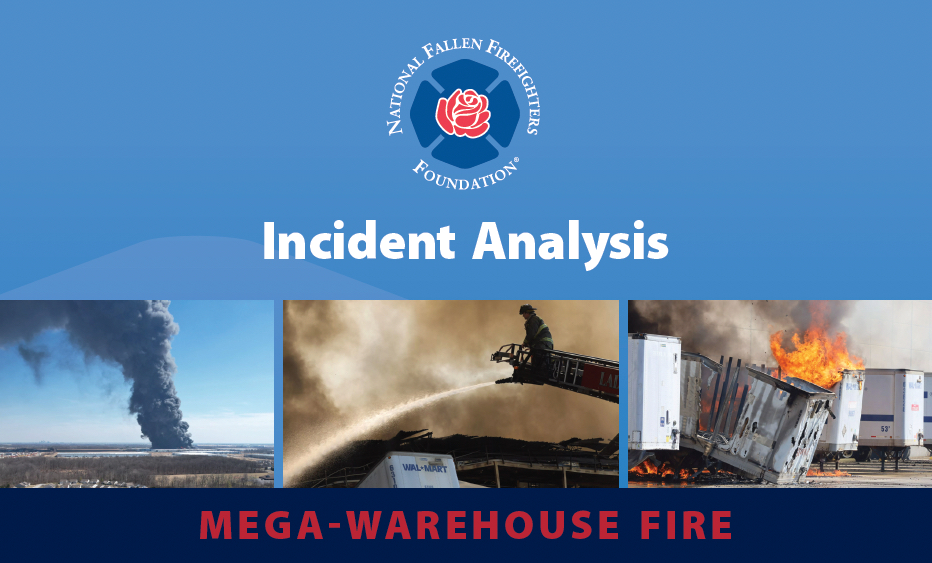
The rapid expansion of the logistics industry across the United States has necessitated a fundamental reassessment of fire suppression strategies and the efficacy of building codes, particularly in light of the rise of mega-warehouses. These structures, often exceeding one million square feet, represent a unique intersection of high-density combustible loads and complex internal geometries that challenge even the most robust fire protection systems. 1 For members of the California State Firefighters Association (CSFA), this issue is of paramount importance given the state’s role as a global logistics hub. In the Inland Empire alone, comprising San Bernardino and Riverside counties, the total footprint of warehousing exceeds 940 million square feet, with many facilities categorized as mega-warehouses larger than 100,000 square feet. 2 The recent incident analysis report conducted by the National Fallen Firefighters Foundation (NFFF) regarding the March 15, 2022, fire at a fulfillment center in Plainfield, Indiana, provides an essential roadmap for understanding these risks. 3 This analysis serves as a critical document for the fire service, detailing how a facility built to modern standards and equipped with advanced engineered systems suffered total destruction, and how three firefighters narrowly escaped a catastrophic outcome. 4
The Plainfield report examines the conditions that enabled a seemingly routine, sprinkler-controlled fire to escalate into a total loss valued at more than $500 million. It identifies a series of systemic and tactical failures that, when combined with the inherent challenges of large-scale storage, created an untenable environment. For the California fire service, which operates under the evolving mandates of Assembly Bill 98 and the 2025 California Fire Code updates, the lessons from Plainfield are both timely and mandatory for operational safety.
Structural and Mechanical Profile of the Allpoints Parkway Facility
The facility at 9590 Allpoints Parkway was a 1,144,000-square-foot warehouse designed to accommodate a high-volume order-fulfillment operation. Constructed in 2014, the building utilized Type II non-combustible construction with precast tilt-up concrete walls and a steel-deck roof supported by unprotected steel trusses and columns. The roof assembly was insulated with four inches of polyisocyanurate foam and covered with a thermoplastic polyolefin (TPO) membrane. A critical structural feature was the four-hour rated fire wall that divided the building into two sections, a defense mechanism intended to provide a barrier against the “maximum foreseeable loss”.
At the center of the operational risk was the Pick Module, a massive four-level racking structure occupying most of the building’s south section. This structure was 39 feet high and incorporated three full mezzanines separated vertically by 10 feet 6 inches. The floors of these mezzanines consisted of prefabricated steel “Q-decking” with wood-composite walking surfaces. This configuration created a labyrinthine environment with over 20 miles of aisles lined with combustible consumer goods.
Fixed Fire Protection Systems and Hydraulic Design
The facility was protected by a primary system of Early Suppression Fast Response (ESFR) sprinklers at the roof level, supplemented by eight CMDA (Control Mode Density/Area) systems within the Pick Module racking. The hydraulic demand of these systems was supported by two 2,500-gallon-per-minute (gpm) fire pumps, one electric and one diesel, and two 300,000-gallon on-site water storage tanks.
The calculation of hydraulic demand is central to understanding why the system eventually failed during the escalation phase. The ESFR sprinklers, designed with a K-factor of 25.2, required a minimum discharge pressure of 50 psi to achieve the intended density of 1.8 gpm per square foot over the most remote 1,000 square feet.
At 50 psi, a single ESFR head would discharge approximately 178 gpm. In contrast, the Pick Module sprinklers were designed for fire control rather than suppression, requiring a density of 0.30 gpm per square foot over 2,500 square feet.
| Component | Specification | Metric |
| Building Area | 1,144,000 | Square Feet |
| Roof Height | 45 | Feet |
| ESFR K-Factor | 25.2 | gpm/psi^0.5 |
| CMDA K-Factor | 11.2 | gpm/psi^0.5 |
| Fire Pump Rating | 2,500 | gpm @ 150 psi |
| Stored Water | 600,000 | Gallons |
| Fire Wall Rating | 4 | Hours |
This infrastructure represents the state of the art in warehouse protection, yet the Plainfield analysis reveals that the effectiveness of these systems is contingent on maintaining pressure and confining the fire to a single level—assumptions that were violated during the incident.
Chronology of the Incident and Operational Decision Points
The fire occurred on March 15, 2022, during routine operations, with approximately 565 employees inside the facility. The initial alarm was triggered by the Very Early Smoke Detection and Alarm (VESDA) system at 11:52:20 AM, followed by a waterflow indication from the second level of the Pick Module at 11:53:21 AM. Witnesses reported that the fire grew rapidly, with flames reaching the underside of the mezzanine decking before the sprinklers activated.
When fire department units arrived at 12:03 PM, there were no outward signs of fire, and the building was in the process of evacuation. Firefighters entered the building and advanced a hose line to the second level of the Pick Module, where they found that the sprinkler system had successfully controlled the fire, confining it to a small area of shelving. At 12:10 PM, firefighters reached the seat of the fire and began final extinguishment and overhaul operations.
The Personnel Accounting Crisis
A major complication occurred shortly after arrival when facility supervisors reported that 55 employees were unaccounted for. In a building of 1.1 million square feet, the task of searching for 55 potential victims significantly altered the incident’s risk-management profile. Crews were diverted from suppression and overhaul to conduct primary search operations throughout the smoke-filled aisles of the Pick Module. It was later determined that all employees had safely evacuated, and the reported missing persons were due to an inadequate accounting process, a critical logistical lesson for fire departments responding to large-scale facilities.
Decision to Deactivate Fire Protection Systems
Based on the observation that the fire on the second level was fully extinguished and under control, the Incident Commander decided to shut off the sprinklers and fire pumps to facilitate smoke removal and prevent further water damage to the unburned inventory. The first request to shut down the pumps was made at 12:31 PM. The electric pump was shut down at 12:35 PM, followed by the diesel pump at 12:38 PM.
At the exact moment the electric pump was deactivated, a water flow signal was recorded from ESFR Riser 7, which covered the roof area directly above the Pick Module. Because no personnel were assigned to monitor the alarm panel at the scene, this critical indicator of a secondary fire was missed. The deactivation of the pumps rendered the sprinkler system ineffective at the precise moment it was needed to control a smoldering fire that had extended vertically to the fourth level.
The Failure Mechanism: Vertical Extension and Fire Wall Breach
The NFFF report posits a “Vertical Fire Extension Hypothesis” to explain the sudden transition from a controlled state to a total loss. The analysis suggests that during the initial stages of the fire, before the second-level sprinklers activated, flames or heated gases found a path through openings in the mezzanine decking. This fire likely smoldered undetected on the third or fourth levels for nearly 40 minutes, hidden by the “cold smoke” and obscured by the high-density storage.
When the fire pumps were shut down, the water supply to the upper-level sprinklers was interrupted. The smoldering fire transitioned to flaming combustion and grew rapidly in the upper racking, eventually penetrating the roof deck. By 12:45 PM, firefighters on the roof reported that the fire had breached the structure, and within 60 to 90 seconds, the entire south section of the building was enveloped in smoke and flame.
Failure of the Four-Hour Fire Wall
The firewall was intended to be the ultimate barrier, but it failed to contain the incident to the south section. As the south section became fully involved, the massive heat release created a thermal column that radiated downward and across the wall. This heat ignited the roof membrane and insulation on the north side, allowing the fire to outflank the structural barrier. This failure underscores the limitations of firewalls in mega-warehouses: when the combustible load on one side becomes fully involved, the radiant heat may surpass the design parameters of any practical fire-rated assembly.
Operational Challenges: Communications and Visibility
The Plainfield incident highlighted two major operational friction points: radio shielding and visibility in cold smoke. The massive steel structure of the warehouse and the dense racking within the Pick Module created a “Faraday cage” effect that severely impeded the 800 MHz trunked radio system. Firefighters inside the building had significant difficulty communicating with the Command Post, leading to garbled transmissions and failed MAYDAY attempts.
Furthermore, the mixture of smoke and water vapor from the operating sprinklers created “cold smoke,” which lacks buoyancy and stratifies near the floor level. This obscured visibility and prevented the natural rise of smoke that typically assists in fire location. The cold smoke also interfered with the effectiveness of thermal imaging cameras (TIC), as the moisture in the air and the water discharge from the sprinklers masked the heat signatures of the smoldering fire on the upper levels.
Tactical Lessons Learned by Crews on the Ground
The ground crews in Plainfield encountered a series of challenges that have direct implications for standard operating procedures in similar facilities. These tactical lessons are derived from the direct experience of the responding units.
- Recognition of Structural Complexity: The multi-level Pick Module must be treated as a separate structure within the building. Its vertical conduits and lack of fire-rated separation between levels make it prone to rapid vertical spread.
- Dangers of Cold Smoke: Firefighters must recognize that zero-visibility conditions can occur without a corresponding increase in heat. Cold smoke masking can lead to a false sense of security regarding the extent of fire involvement.
- The Lifeline Requirement: Stretching a hose line from the exterior into the fire area is essential, even if interior standpipes are available. This line serves as a physical guide to the exit, which was critical for the three firefighters who escaped the MAYDAY event.
- Personnel Accountability Accuracy: Fire departments must not rely on facility accounting systems during the initial stages of a major incident. Search operations should be prioritized based on life-hazard assessments and verifiable information.
Systemic Lessons and Recommendations After Analysis
The post-incident analysis conducted by the NFFF and a team of experts identified broader systemic issues that the fire service community must address to manage the risks of mega-warehouses.
Sprinkler and Pump Deactivation Criteria
The analysis strongly recommends a more conservative approach to shutting down fire protection systems. The decision to shut off sprinklers should not be made until a physical verification of all potential extension paths has been completed. The logic of “how long is long enough” must be expanded to include monitoring for hidden smoldering fires that can reactivate when water flow is interrupted.
| Phase | Recommendation | Rationale |
| Initial Attack | Charge FDC and monitor Fire Pump | Ensures systems have maximum pressure and redundancy. |
| Control Phase | Do not shut down pumps or valves | Prevents reactivation of fire if hidden smoldering exists. |
| Monitoring | Assign Panel Watch | New waterflow signals are the earliest warning of extension. |
| Termination | Leave pumps on until contractor arrival | Maintains system readiness in case of rekindle. |
Strategy and Tactics: Transitioning to Defensive
Fire departments must be prepared for the rapid escalation of fire in these environments. The report emphasizes that if fixed sprinkler systems fail to control a fire in its early stages, it will quickly exceed the suppression capabilities of any public fire department. Incident Commanders must be willing to transition to defensive tactics as soon as interior conditions become untenable, as the risk to personnel inside a mega-warehouse is extreme once structural integrity is compromised.
Pre-Fire Planning and Training
The complexity of facilities such as the Allpoints Parkway center requires specialized pre-fire planning that extends beyond typical industrial building walkthroughs. Departments must understand the specific hydraulic designs, the locations of all zone-control valves, and the internal layout of complex racking systems. Training exercises should simulate operations within large-area structures, with a focus on air management, crew rotation, and the logistical challenges of operating hundreds of feet from an exit.
Assembly Bill 98 and the “21st Century Warehouse.”
In September 2024, California Governor Gavin Newsom signed Assembly Bill 98 (AB 98), which establishes new design and operational standards for warehouses exceeding 250,000 square feet. This legislation is a direct response to the proliferation of warehouses in the Warehouse Concentration Region, which includes Riverside and San Bernardino counties.
AB 98 introduces several requirements that impact fire safety and emergency access:
- Sensitive Receptor Setbacks: New warehouses must maintain a minimum distance (500 to 900 feet) from schools, residential areas, and hospitals, which provides enhanced defensible space for firefighters.
- Building Design Standards: The law mandates specific energy-efficient features, such as cool roofing and microgrid-ready systems, which can influence fire behavior and electrical hazards.
- Truck Routing Plans: Mandatory routing plans aim to minimize the exposure of residential areas to commercial truck traffic, potentially reducing road congestion that can delay emergency response times.
2025 California Fire Code Updates
The 2025 California Fire Code (CFC), effective January 1, 2026, introduces the most significant overhaul of warehouse fire safety regulations in decades. A central feature of the new code is the requirement for a High Pile Storage Permit, which necessitates a thorough fire code analysis by a fire protection engineer. This analysis must evaluate sprinkler system compatibility with specific commodities and ensure that storage heights conform to the system’s design parameters.
Furthermore, the new code mandates automated fire detection systems in both new and renovated buildings, utilizing “smart” sensors to detect smoke, heat, and CO2. These systems are intended to reduce response times and provide fire departments with improved situational awareness upon arrival, thereby addressing a key failure point identified in the Plainfield incident, in which the panel signals were not monitored.
Recent California Incidents: Esparto and Moss Landing
California has already seen the consequences of complex storage fires. The July 1, 2025, explosion and fire at a fireworks warehouse in Esparto resulted in seven fatalities and highlighted the dangers of undeclared or illegal hazardous material storage in commercial buildings. Similarly, the January 2025 fire at the Moss Landing battery storage plant demonstrated the unique challenges of lithium-ion battery fires, which can lead to thermal runaway and the release of toxic smoke, requiring massive volumes of water for cooling.
These incidents, coupled with lessons from Plainfield, emphasize that the fire risk in modern warehouses is dynamic. The integration of lithium-ion batteries and automated storage and retrieval systems (ASRS) continues to change the fire dynamics that California firefighters must face.
Detailed Operational Guidelines and Tactical Checklist
Based on the findings from the Plainfield report and the context of California’s regulatory environment, the following narrative guidelines are provided for CSFA members to implement in their jurisdictions.
Initial Attack Priorities and Water Supply Management
The primary goal upon arrival at a mega-warehouse fire is to reinforce the fixed fire protection systems. The sprinklers are the only tool capable of effectively applying water to the heart of a high-challenge fire. The water supply should be verified by ensuring all valves are open and checking that fire pumps are operating correctly. A member should be assigned to the pump house to monitor flow and pressure, and to watch for signs of cavitation indicating that the system’s demand exceeds its supply.
At least one pumper from the first-alarm assignment must charge the lines to the Fire Department Connection (FDC). This is not merely a backup measure; it is a critical requirement to ensure that if the fire pumps fail or the storage tanks are depleted, the system can still be supported by the municipal supply or drafted from a hydrant.
The Role of the Alarm Panel Monitor
A critical failure in Plainfield was the lack of awareness regarding new alarm signals. Fire departments must consider designating a “Panel Monitor” whose sole responsibility is to stay at the FACP and communicate changes in alarm status to the IC. A new waterflow signal in a previously clear zone is the most reliable indicator that the fire has extended beyond its original area. This information is crucial for the IC to make informed decisions about whether to maintain interior operations or transition to a defensive posture.
Interior Tactical Considerations and Air Management
Interior operations in a mega-warehouse are logistically equivalent to operations in a high-rise or a tunnel. The vast distances require a sophisticated approach to air management. Firefighters must manage air supply.
Crews must stay in physical contact with a hose line or a search rope at all times. In the zero-visibility conditions of a rapidly escalating fire, these lines are the only reliable way to navigate back to the exit. Furthermore, the IC should consider deploying a Rapid Intervention Team (RIT) within the building at a safe forward location to reduce response time in the event of a MAYDAY.
| Incident Stage | Tactical Objective | Personnel Assignment |
| Dispatch/Arrival | Confirm Evacuation and Personnel Count | Incident Commander / Liaison |
| Initial Attack | Charge FDC and Verify Pump Operation | Engine Company / Pump Op |
| Reconnaissance | Locate Fire and Assess Extension | Truck/Ladder Company |
| Suppression | Support Sprinklers / Overhaul Debris | Engine Company |
| Monitoring | FACP Signal Tracking | Panel Monitor |
| Logistics | Manage Air Supply and Crew Rotation | Support Services / Rehab |
The “How Long is Long Enough” Rule for Termination
The Plainfield incident demonstrates that a fire can be effectively suppressed and still remain a threat. When considering shutting off the sprinklers, the IC should adhere to a “conservative observation” period. It is recommended that the system remain in operation for at least 30 minutes after all visible fire has been extinguished and after a physical check of the levels above and below has been completed. Even then, a member with a radio must stay at the valve to reopen it immediately if the fire rekindles.
Advocacy for Beyond-Code Protection
California fire departments should utilize the findings of the Plainfield report to advocate for enhanced protection in new mega-warehouse projects. This includes:
- Redundant Water Supplies: Requiring a secondary water source (e.g., a connection to the municipal main and on-site tanks) ensures that if one fails, the system can still function.
- Enhanced Smoke Control: While many codes do not require mechanical smoke exhaust, these systems are vital for maintaining visibility for search and rescue operations.
- In-Building Communications Infrastructure: Departments should enforce requirements for Bi-Directional Amplifiers (BDA) in large-area structures to solve the shielding problem identified in Plainfield.
Integrating Technology into Response
The integration of IoT and smart building technologies offers a path forward. Real-time access to a facility’s inventory management system can tell firefighters exactly what commodities are on the shelves and whether they are hazardous. Similarly, advanced FACP systems that provide a graphical interface of waterflow signals can replace the need for a physical member to stand at the panel, provided the IC has access to a mobile terminal.
The Importance of the NFFF Incident Analysis
The document provided for this analysis is a cornerstone for professional development within the fire service. It provides a detailed, clinical look at a “near-miss” incident that could have been a multi-fatality tragedy. By making this information about the risks and lessons learned, the CSFA can ensure that its members are equipped with the knowledge to manage the logistical frontier of California’s mega-warehouses.
In summary, the destruction of the Plainfield facility was a failure of the fire protection design to account for the vertical extension within complex racking, compounded by the operational decision to shut down the water supply prematurely. As California continues to build these 21st-century landmarks, the fire service must remain vigilant, prioritize the maintenance of fire protection systems, and always assume that a mega-warehouse fire is “not out” until it has been physically verified through a rigorous, level-by-level inspection. The safety of the firefighter and the protection of California’s economic engine depend on this nuanced understanding of mega-warehouse dynamics.
Download National Fallen Firefighter Foundation Incident Analysis: Mega-Warehouse Fire INCIDENT ANALYSIS REPORT (PDF 22.3mb)
About the Author
 David Santos
Colton FD
[email protected]