

By Chief Sam DiGiovanna
The Liquid Side of New Technology
When we think of new technology primarily in public safety, most are inclined to think of computerization, mapping, digitalization, infra red cameras, computerized equipment, MDT’s, record storage & maintenance, etc. Rarely do we think of anything ‘liquid’ when it comes to new technology.
Most suppression liquids or retardants have remained the same for over 60years. Therefore, we think of it as our only option or solution while preventing or suppressing wildfires. We need to keep up with new technology even with liquids.
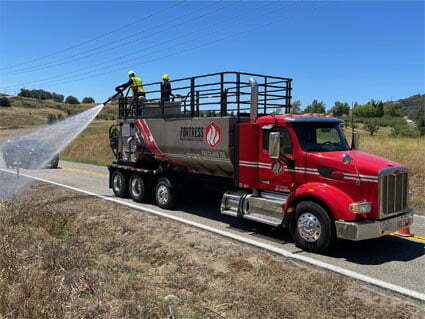
This week I attended an event held by Cal Fire & the Fire Safe Council of Temecula Valley. It was great to see old fire service friends and meet new ones from agencies within Riverside, San Diego and Los Angeles. The event was created from a grant from Cal Fire and the Fire Safe Council of Temecula Valley featuring Fortress North America.
I was surprised by the turn out of fire service personnel, but also from private entities and political figures seeking to learn about new technology and newer, safer and cleaner fire prevention and retardants for our environment.
I’m certainly no chemist, however, what I found interesting about Fortress and their new, long term fire retardant is it is self hydrating and pulls moisture from the air and distributes it to fuel. This passive re-hydration mechanism forms an exceptional fire-fuel barrier, while cooling the flame front. Even before burning occurs, the Fortress fire retardant responded to increasing temperatures by absorbing heat and releasing water, effectively cooling combustibles and vegetation while lowering the probability of ignition. Something completely unique to current long term fire retardants.
It was evident, this new technology captured the attention of those in attendance. This was certainly a breakthrough in today’s wildfire prevention and firefighting techniques. What I was equally impressed with was the way Fortress North America presented itself at this event. The staff and personnel are all seasoned fire service veterans from local, state, and federal entities with years of experience.
The day started early with staging at Cal Fire Station 75. It was then moved to the site of Volcano Fire in August 2012 https://lnkd.in/gSE4TFKf With a morning briefing of the day’s Incident Action Plan, the Incident Commander covered every component from safety, weather, medical, PIO, planning, logistics etc. The morning briefing was detailed with instructions to the very end with a debriefing of the event.
The members of Fortress were true professionals, very humbled while not trying to be firefighters, but as a resource for prevention and suppression for both fire service agencies and private entities when and if requested.
I have always liked wildland incidents either responding as a firefighter or as strike team leader. I like new technology, but I’ve never given much thought to the “liquid side” as being something as new technology. But it has finally landed by both air and ground!
Chief Sam DiGiovanna is a 35-year fire service veteran. He started with the Los Angeles County Fire Department, served as Fire Chief at the Monrovia Fire Department, and currently serves as Chief at the Verdugo Fire Academy in Glendale. He also is a consultant for Cordico www.Cordico.com, Lexipol www.Lexipol.com