

|
Getting your Trinity Audio player ready...
|
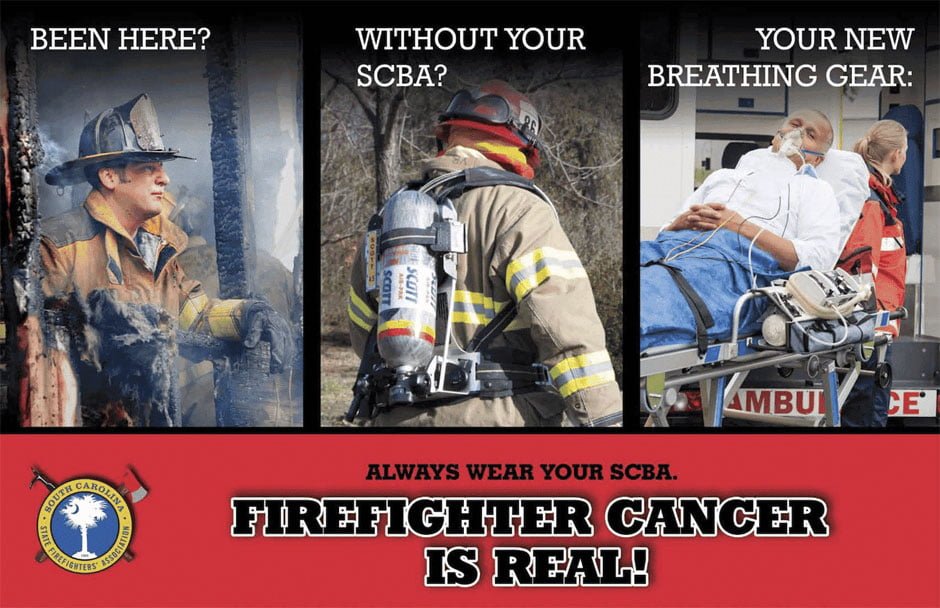
You don’t need us to tell you that firefighting is a tough job. Besides the evident dangers, there’s a hidden hazard you need to understand: your heightened risk for certain types of cancer. This isn’t fear-mongering; it’s essential information that can help you protect yourself. In this article, we’ll cover your cancer risk, discuss practical and affordable screening options, and bring you up to speed on a substance in your gear that might be posing additional health threats: per- and polyfluoroalkyl substances (PFAS).
Understanding Your Cancer Risk
The daily realities of firefighting expose you to a cocktail of carcinogens, increasing your risk for various cancers. A comprehensive study from the National Institute for Occupational Safety and Health (NIOSH) indicated that firefighters have a 9% increase in cancer diagnoses and a 14% increase in cancer-related deaths compared to the general U.S. population (Daniels, 2013). In wildfire-prone California, those numbers could be higher.
Here’s a closer look at the specific types of cancer you’re up against, compared to the general public:
- Testicular cancer: Firefighters have a 2.02 times higher risk (NIOSH, 2010).
- Multiple myeloma: Your risk is 1.53 times higher (NIOSH, 2010).
- Non-Hodgkin’s lymphoma and leukemia: Firefighters experience a 1.51 times increased risk (NIOSH, 2010).
- Skin cancer: You have a 1.39 times higher risk (NIOSH, 2010).
- Prostate cancer: Firefighters face a 1.28 times increased risk (NIOSH, 2010).
- Lung cancer: Your risk is 1.10 times higher (NIOSH, 2010).
PFAS in Your Gear: What You Should Know
PFAS are a group of chemicals that have been used in firefighting foam and gear since the 1940s. Their heat and water resistance make them useful in our line of work, but recent research suggests that they could pose significant health hazards. There’s a potential connection between PFAS exposure and an increased risk of various cancers, like kidney and testicular cancer, and possibly others like prostate, bladder, and ovarian cancer (ATSDR, 2018). The problem is, PFAS can be absorbed through the skin, which means your gear could be exposing you to these substances without your knowledge.
The firefighting community and manufacturers are pushing to find PFAS-free alternatives for firefighting gear. However, the transition will take time. In the meantime, the best thing you can do is to follow best practices for decontamination and handling of your gear to limit your exposure.
Cancer Screening: Protecting Your Health
Cancer screenings are a critical part of early detection. Catching the disease at an early stage significantly improves treatment outcomes. Here are some practical, cost-effective screening options to consider:
- Workplace Programs: Some fire departments offer on-site cancer screenings. If yours doesn’t, it might be worth pushing for it.
- Insurance Coverage: Most health insurance plans cover preventive screenings for various cancers. Make sure you’re making full use of your policy benefits.
- Community Clinics and Health Centers: Many local health clinics offer low-cost or free cancer screening services. The U.S. Health Resources and Services Administration (HRSA) has an online tool to find a center near you.
- Screening Programs: Organizations like the American Cancer Society, the National Breast Cancer Foundation, and the Skin Cancer Foundation often sponsor free or low-cost screening programs.
- Clinical Trials: By participating in a clinical trial, you might gain access to free or low-cost cancer screenings. You can check the National Cancer Institute’s database of clinical trials.
- State Programs: The California health department offers various programs for cancer detection that provide free or low-cost screenings.
Remember, early detection is a game-changer. Stay proactive with regular check-ups, be aware of changes in your body, and make sure to get your screening tests. Always consult with your healthcare provider for personalized advice based on your age, health history, and specific risk factors.
PPE and Decontamination: Not Optional
Minimizing exposure to carcinogens is a vital part of your job. Proper use of Personal Protective Equipment (PPE) and following decontamination procedures after every fire can reduce your cancer risk.
Bottom Line
Your job as a firefighter involves unique risks, and part of managing those risks is being informed. Understand your increased risk of certain cancers, stay vigilant with regular screenings, and take the necessary precautions with your gear and on the job. In doing so, you’re not just protecting your community; you’re protecting your health.
If you have any questions or ideas for articles, please reach out to [email protected]
References
Daniels, R. D., Kubale, T. L., Yiin, J. H., Dahm, M. M., Hales, T. R., Baris, D., … & Pinkerton, L. E. (2013). Mortality and cancer incidence in a pooled cohort of US firefighters from San Francisco, Chicago and Philadelphia (1950–2009). Occupational and environmental medicine, 71(6), 388-397.
Agency for Toxic Substances and Disease Registry. (2018). Toxicological Profile for Perfluoroalkyls. https://www.atsdr.cdc.gov/toxprofiles/tp200.pdf
American Cancer Society. (n.d.). Cancer Screening Guidelines. https://www.cancer.org/healthy/find-cancer-early/cancer-screening-guidelines.html
U.S. Health Resources and Services Administration. (n.d.). Find a Health Center. https://findahealthcenter.hrsa.gov/
National Cancer Institute. (n.d.). Find a Clinical Trial. https://www.cancer.gov/about-cancer/treatment/clinical-trials/search
California Department of Public Health. (n.d.). Cancer Detection Programs. https://www.cdph.ca.gov/Programs/CID/DCDC/Pages/Cancer-Detection-Programs.aspx
National Institute for Occupational Safety and Health. (2010). Health Effects from Occupational Exposure to Firefighting. [https://www.cdc.gov/niosh/pgms/worknotify/pdfs/ff-ge-10-168-2136.pdf](https://www.cdc.gov/niosh/pgms/work