

|
Getting your Trinity Audio player ready...
|
SPONSORED GUEST COLUMN
By Miguel Leyva, Atraxia Law
Because they encounter countless health hazards on the job, civilian and military firefighters have a significantly higher risk of developing cancer than the general population. In fact, cancer is a leading cause of death among this occupational group, as firefighters have a 9% greater risk of coming to struggle with cancer and a 14% higher risk of dying from cancer. One of the factors that contribute to these grim statistics is their use of the firefighting foam AFFF, which contains perfluoroalkyl and polyfluoroalkyl substances. Exposure to these chemicals, also known as PFAS or “forever chemicals,” has a strong association with certain malignant diseases, including kidney, testicular, prostate, and bladder cancer.
Civilian and military firefighters use AFFF for fires caused by flammable and combustible liquids and gases, such as jet fuel, ethanol, diesel, and petroleum, collectively known as Class B fires. The formula of this fire suppressant usually contains between 50% and 98% PFAS, making it highly dangerous to the health of firefighters. Exposure to the chemicals in AFFF occurs even if firefighters wear the maximum feasible protective equipment, as particles of PFAS will linger in the air after a fire is extinguished, from where they can easily be inhaled. Additionally, exposure to PFAS can also occur at fire stations.
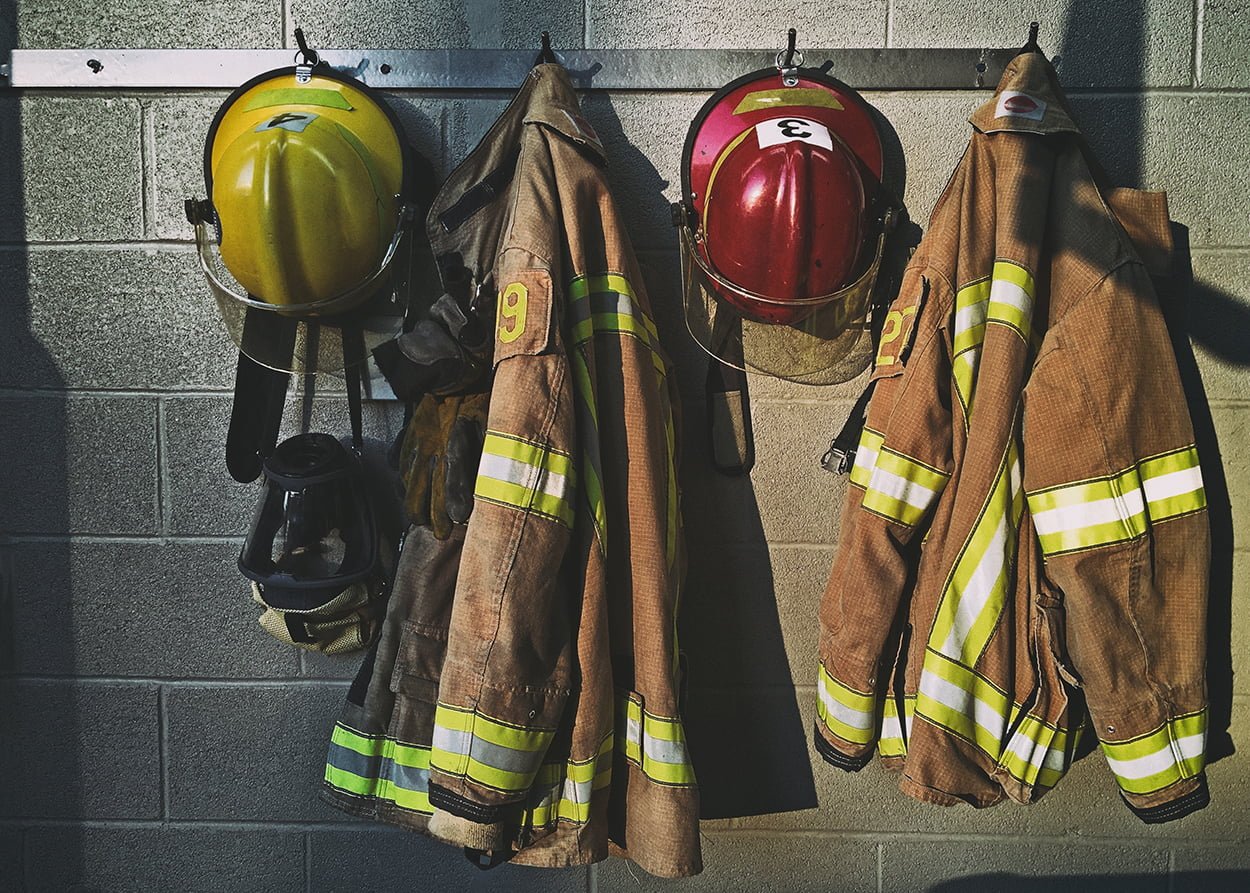
Furthermore, these substances are present in the outer layers of turnout gear. The moisture barrier and the outer shell of turnout gear contain PFAS concentrations up to 400 times higher than the layer closest to firefighters’ skin. With wear and tear, turnout gear can also release PFAS, which firefighters can inhale and ingest. Out of the thousands of chemicals from this group, PFOA and PFOS have been deemed the most dangerous, as they have a strong connection with cancer. Unfortunately, they are nearly always lurking in the AFFF civilian and military firefighters use, increasing their cancer risk.
Civilian and military firefighters have elevated PFAS levels in their blood, as they are frequently exposed to these chemicals. Because these substances are persistent contaminants, some take more than a thousand years to break down in the environment. Similarly, it takes approximately four years for the PFAS level in the body to go down by half. Nevertheless, PFAS will still be present in the blood of firefighters due to their constant exposure to AFFF. At the moment, the most prevalent cancer in firefighters is testicular cancer, and this occupational group is more than twice as likely to develop it than the general population.
Another route of PFAS exposure for civilian and military firefighters is the combustion of products containing these substances on the fire ground. Firefighters can limit their PFAS exposure by wearing turnout gear only when it is absolutely necessary, maintaining the gear as clean as possible, keeping the turnout gear out of living areas of the station, and keeping it out of places such as the trunk of the car and the apparatus cab whenever possible. A sliver of hope for civilian and military firefighters is Maryland Congressman Glenn Ivey pushing a new legislation, according to which they would no longer have to wear PFAS-containing turnout gear.
“They’re already putting their lives at risk to fight fires. We don’t want to put them at risk just from the gear that’s supposed to be saving their lives,” Ivey said.
Materials with PFAS were first used in the 1940s and are still present in hundreds of products, including all three layers of firefighters’ turnout gear. The PFAS Alternative Act, introduced by Michigan Representative Debbie Dingell, would authorize $25 million a year through 2028 for the development of PFAS-free firefighter gear. This will considerably reduce exposure to these harmful chemicals among firefighters. However, AFFF exposure remains a problem for civilian firefighters, as military firefighters might no longer have to use PFAS-containing firefighting foam in the future, according to the Pentagon.
Finally, it is important for civilian and military firefighters struggling with cancer or other diseases related to PFAS exposure to know that they might be entitled to financial compensation from the manufacturers of AFFF. Because the process of filing a claim on their own is very complex and tedious, it is best to work with a team of experts, such as the one at Atraxia Law. With over 35 years of experience in evaluating toxic exposure and personal injury claims, its team of professionals can offer firefighters injured by “forever chemicals” a free-of-charge case evaluation to determine whether they are eligible to file a claim.
About the Author
Miguel Leyva is a case manager at Atraxia Law. He provides support to civilian and military firefighters injured by AFFF exposure. Miguel helps firefighters with cancer gather and organize relevant information about their injuries so they can subsequently file a claim.