|
Getting your Trinity Audio player ready...
|
By: Kellie Hoverman
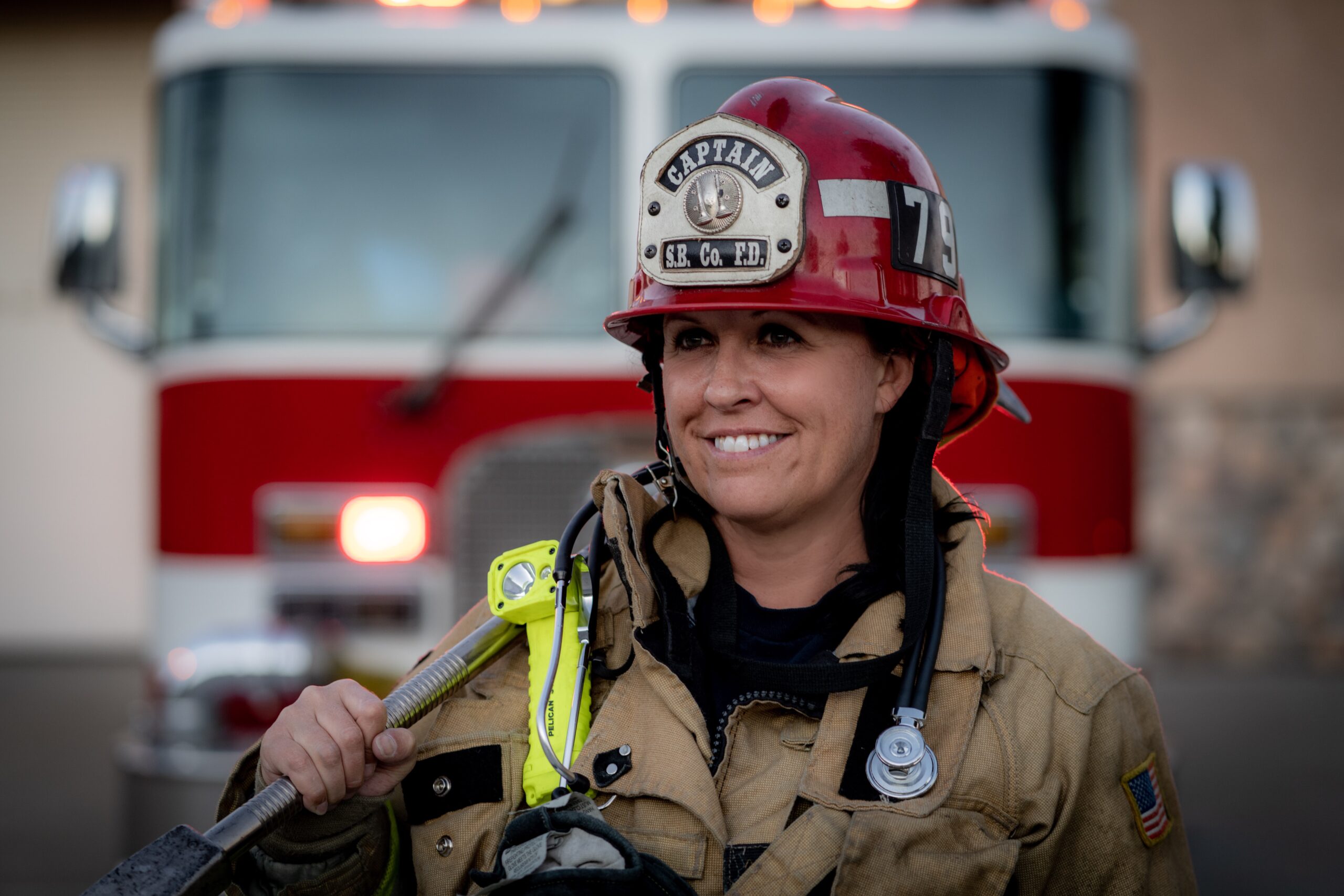
Retired Fire Captain with San Bernardino County Fire
I want you to envision a typical workday: you throw your gear on the rig, grab a cup of coffee with your crew, and suddenly the tones go off. Dispatch announces a three-acre vegetation fire quickly spreading on a hot summer morning behind homes in your second due. You arrive on the scene and position yourself to take Division Z to flank the side closest to the houses. Everything is running smoothly. After an hour, the fire is under control, and you take one step on the downhill side. Within seconds, you realize you are staring at the blue, smoke-filled sky. A firefighter comes running over because they saw you collapse. That’s when you realize your knee is done. And after several prior surgeries, a flash of reality announces in your head: Was this my last call?
This story I am sharing is my own, and the more firefighters I talk with, the more I realize that I am not alone. Being told by several doctors that they couldn’t consciously clear me to work on a fire engine after the stress and the strain I had put on my body for over 20 years felt like a punch to the gut. My first thought was about my family and whether we could financially survive if I couldn’t work. We all have an hourglass for our time in this career. Each grain of sand brings us closer and closer to our last call. Mentally, you hope and pray that it never happens to you, almost feeling invincible. But it’s always lurking in the back of our minds. Whether our brothers and sisters have an injury or an illness from exposure, the numbers increase yearly. And this isn’t just happening in your department; it’s happening from coast to coast. Hiring is getting more difficult; call volumes are increasing, and people are getting overworked. The diversity of incidents, from firefighting to hazardous materials, EMS, and rescue incidents, increase the threats we face and are exposed to daily, increasing the likelihood of illness or injury. Most of us aim for a full career and dream of a planned “last shift,” but we don’t know how our path will end.
Although we may not be able to predict when our “last shift” will occur, we can begin to think about and prepare for our financial future to enjoy a full retirement. Developing and following a financial plan can be the foundation for a fuller financial future, where if the unexpected happens, money is one less thing you have to worry about.
One of the many benefits of joining a fire department is the pension. Less than 17% of the American workforce currently has a defined benefit retirement (pension). I don’t want to dive into pensions too deeply, as pensions vary based on many factors. My generation negotiated for 3% at 50. But, after many pension systems began drowning in unfunded liabilities and poor investments, most have moved to a two-tier system, with 3% @ 50 or 55 comprising tier I and tier II being 2.7% at 57. We are forced to work longer careers to maximize the pension benefit. Five years or .3% annually may not seem like a huge difference to a new boot, but it can be a financial strain in the long run.
As with anything, developing good habits can lead you to success. It’s never too late to start. Habits are important for physical, mental, financial, and overall well-being. And much like we exercise to stay physically fit, we can also develop financial habits to ensure our financial health. Starting with small habits like paying yourself first (saving) out of every paycheck. Begin with a small amount or % and gradually increase it as you make it consistent. It doesn’t matter if it’s $25 or $1000; it’s developing the habit. Just like how we start with lighter weights at the gym, the same principles apply to saving money. Or implement the save it last plan. When you get a contract increase or COLA, simply put that amount into your savings or retirement account. These are not new concepts; I’m sure many have heard them before, but do people actually implement them?
Most people say that if you have saved enough to pay your bills for three months, that’s sufficient. But what if you are the main earner in your family? Is three months enough? I would say you should aim for six months of all expenses. This is called an Emergency Fund and will prepare you and your family for unforeseen circumstances.
Many might argue that saving money seems impossible with the rising cost of living expenses. This is why you start small and pay yourself first, where it’s not easily accessible to avoid the temptation of spending it. If you know the funds are in your checking account, you’re training your brain to say it’s ok to buy that expensive coffee instead of making a cup at the station. The point is that one small change can create healthy savings habits.
How do I know which financial habits are healthy? I talk to people every day, and ninety percent of them have never had a financial analysis done. And less than 5% of Americans have a budget! They manage their hard-earned money like an engineer at the pump panel. Money comes in, money goes out—if I don’t have enough money, I need to work overtime to increase the flow. It might sound funny, but I honestly had a client tell me that! And to be completely honest with you, I used to operate the same way. It’s security. We know the next check is coming until you have that one shift where everything changes.
When a financial analysis is done, those habits, both good and bad, tend to jump off the page. Everyone is different; some are in debt, some are excessive spenders, and some have their money in risky accounts. I always recommend getting an annual analysis done as soon as you start making money. As you get closer to retirement, increase it to every six months if the market changes. In 2008, 2017, and 2020, many firefighters saw their 457 deferred compensation accounts rapidly drop and felt forced to stay at work for another four to five years in hopes they could get their money back. Financially, time can work in our favor if our money is in the right places. Physically, time can be our worst enemy.
One thing I ask people to consider is the interest rate on their savings accounts. Some people don’t even know, but most Americans have their savings in an account that earns them .25% to 1% annually! Is that your money working for you? That doesn’t keep you up with the stated average annual inflation rate of 3%. If your savings aren’t even keeping up with inflation rates, you’re working against yourself.
The biggest fear for retired Americans today is running out of money, especially those with a fixed pension, while keeping up with inflation. And rightfully so. Consider this: if a retiree receives a 2% retirement adjustment yearly, is that keeping up with inflation, increasing taxes and medical costs? More and more retirees are looking for other jobs after retirement, seeking another source of income, and jumping back on the hamster wheel. And those are the ones who are still healthy enough to continue working.
In today’s world, either both spouses are making an income, or one is working multiple jobs, long hours, and never being home. Feeling the heavy burden of financial strain as families grow and inflation climbs, we must be prepared. As the old saying goes, “If you fail to prepare, you are preparing to fail.” Think of all the training and hours you needed to earn the uniform and badge and prepare yourself for the daily calls we face. Why wouldn’t we invest that same time and effort to prepare ourselves for the “what if” in our financial future? Let’s make that “what if” turn into an “even if.”
For those who have read this article, our services are complementary. I have included my contact information below if you want to learn more.