

|
Getting your Trinity Audio player ready...
|
June is National Safety Month. This week’s ‘Safety’ Topic is about roadway safety. Lets look at roadway safety for first responders. Apparatus positioning, simple equipment and a “get in, get out” mindset are essential to scene safety
Roadway incidents are one of the inherently risky scenes where we as fire and EMS personnel operate. As I previously wrote in “The blocking apparatus: A department’s close call prompts a change in policy,” I experienced a frightening incident that prompted my organization to make changes to how we respond to certain incidents.
While we can’t predict the behavior of every motorist that travels through our active incident scenes, there are preventative measures we can do as first responders to reduce our risks. As such, let’s expand upon our discussion of blocking apparatus to consider more broadly how we can direct traffic away from incident scenes, better protecting our fellow first responders and the members of our communities.
Use apparatus to direct drivers
First things first, be intentional about where you position your fire apparatus on accident scenes. Apparatus positioning can help limit the options for the motorists navigating through the incident scene, thereby giving first responders more control of the traffic flow.
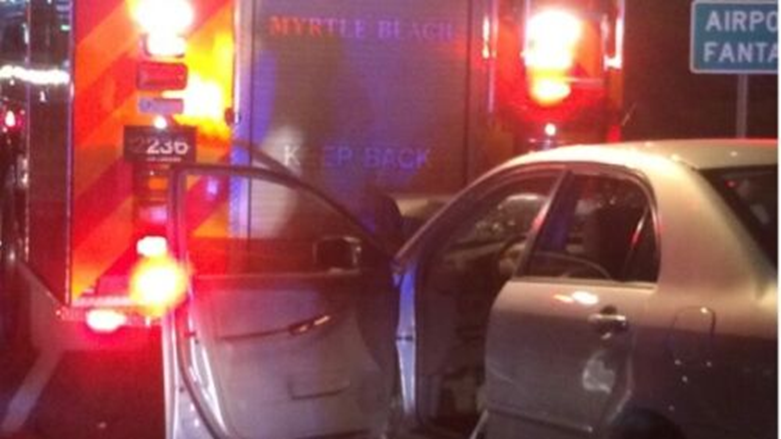
Our fire apparatus are not only key in protecting the incident scene, but they also serve as great directional tools for diverting oncoming traffic where it’s not possible to close the entire roadway. Position the apparatus at a 45-degree angle to provide the best scene protection while guiding the on-coming traffic away from the scene. This positioning gives approaching motorists subtle guidance as to merging away from the lane, and provides an extra layer of protection for our members in the event the apparatus is struck, as it will deflect both the striking vehicle and our apparatus away from the accident’s working zone.
Another tip: Avoid giving the motorist a 50-50 decision for scene navigation. Even if there’s room for traffic to go around the scene on both sides, it’s best to limit their path to one side. By placing our apparatus in a posture that completely protects one side of the scene, we limit the hazards to a single side of the incident, better controlling the scene and protecting our personnel.
The blocking apparatus: A department’s close call prompts a change in policy
Adding a second blocking apparatus creates an extra layer of protection
Employ traffic control devices
Traffic control devices, especially traffic cones, are powerful aids in directing traffic on emergency scenes, directing motorists how to safely proceed around the incident scene. I recommend at least five or six cones at a minimum to help direct traffic. Note: Many police departments carry traffic cones in their cruisers in the event that your fire apparatus does not have any available or needs more.
Traffic cones can be positioned several hundred feet downstream from the incident scene. This gives motorists both forward warning, and plenty of opportunity to switch lanes or merge away from the scene prior to reaching the positioned fire apparatus. Road flares or lights can be placed in addition to the traffic cones during night operations to increase visibility for the drivers.
Portable speed bumps are also great at reducing vehicle speeds. Place these in the lanes of travel for the motorists passing the accident scene to help manage and slow their speed. These devices are worth their money and enable you to manage your incident scene traffic needs without committing multiple blocking apparatus.
Get in and get out
My final piece of advice for limiting vehicle traffic though an incident scene is to simply clear the scene as soon as possible. Sounds easy, right? It’s a simple idea but not always simple in practice, as there are a variety of factors that can require our personnel to work on scene for extended periods of time – vehicle extrications, vehicle fires and multiple vehicle accidents, to name a few.
If there are no injuries or hazards and the vehicles can be moved to a safe location (e.g., a nearby parking lot), then take that initiative. I have seen companies sit on scenes for far too long, which only exposes the working personnel to unnecessary risk. So, get-in, set-up and get-out when you are finished.
Consider these tips for how to work most efficiently on the scene and get out quickly without compromising patient care or safety:
- Take an appropriate apparatus positioning for blocking and scene control;
- Determine the number of vehicles involved and whether there are hazards, including fuel leaks and debris;
- Quickly triage and obtain a patient count;
- Coordinate with law enforcement for scene control;
- Remove the involved vehicles from the roadway if applicable; and
- Assist the tow and recovery personnel with debris clean-up.
Lower the risk
Roadway incidents are responsible for too many line-of-duty deaths and injuries per year in the fire service. Remember to reduce the risk as much as possible, and redirect drivers as best as you can effectively manage.
Source: Fire Rescue1 – Vincent Bettinazzi
Sam DiGiovanna is a 40-year fire service veteran. He started with the Los Angeles County Fire Department, served as Fire Chief at the Monrovia Fire Department, and currently serves as Chief at the Verdugo Fire Academy in Glendale. He is Director at Large with the California State Firefighters Association, Associate Director for the California Training Officers Association and a consultant for www.Lexipol.com