

By Chief Sam DiGiovanna
It’s monsoon season and fire season – can wildfires create lightning?
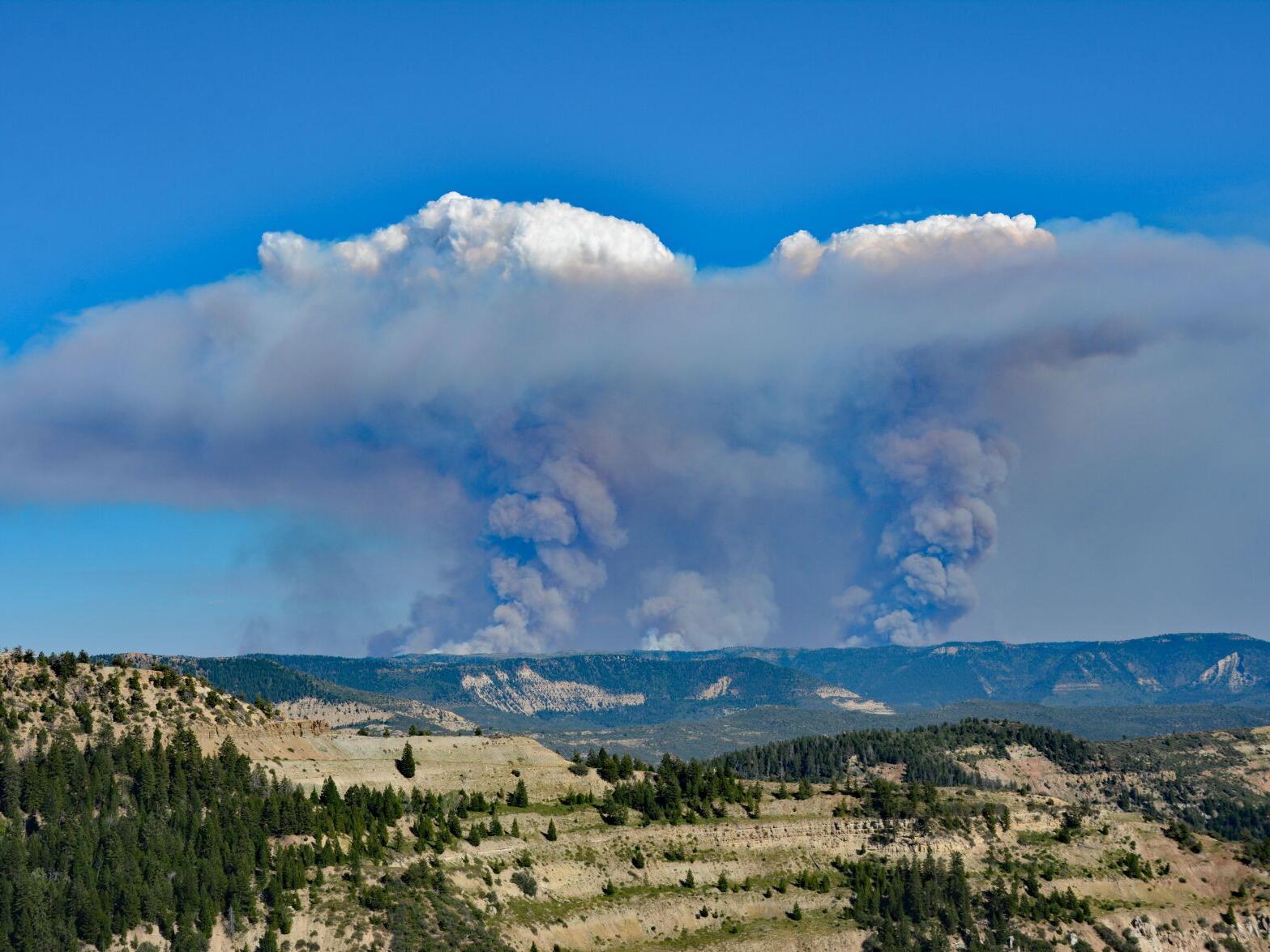
Yes! Pyrocumulus clouds – aka fire clouds – look like giant, dirty-colored thunderheads that sit atop a massive column of smoke from a wildfire. Often the top of the smoke column flattens into the shape of an anvil.
Here is how it happens: When air over the fire becomes superheated, it rises in a large column. As air with more moisture rises, it rushes up the smoke column into the atmosphere, and the moisture condenses into droplets. That is what creates the “fire clouds” that look much like the thunderheads seen before a big thunderstorm.
Sometimes these clouds can turn even more fierce and become what are known as “pyrocumulonimbus” clouds.
A cumulonimbus without the “pyre,” is imposing enough – a massive, anvil-shaped tower of power reaching 5 miles high, hurling thunderbolts, wind, and rain.
Add smoke and fire to the mix and you have pyrocumulonimbus, an explosive storm cloud actually created by the smoke and heat from a wildfire.
These are extremely dangerous as they add to erratic fire behavior!
Powerful electric sparks from a thunderstorm cause lightning, which can kill instantly. Lightning can strike two points up to 10 miles apart at the same time and whether or not blue sky is visible.
Lightning moves at 90,000 miles per second with voltage up to one billion volts. A standard household electrical outlet is 120 volts. The lightning flash, or channel, is approximately 4 inches in diameter.
Lightning reaches temperatures five times hotter than the surface of the sun. The surrounding air expands rapidly due to the heat of the bolt’s flash and causes thunder, warning us that lightning is present.
Before you travel, hike or go outdoors: Check the local weather forecast Arrange activities to minimize your exposure to lightning danger.
Use these guidelines to make a lightning safety plan and be prepared to follow it.
- Be aware of the nearest safe structure or vehicle and how long it will take to reach it.
- Listen for thunder, watch for lightning, and observe the direction of storm movement.
- Be vigilant of possible flash floods or falling rocks during or after storms.
- If you find yourself in a dangerous situation with a thunderstorm approaching, take cover.
If your hair stands on end, a strike is looming:
- Move away from the canyon edges; leave open areas immediately; and avoid rocky outcrops, lone trees, the tallest trees, poles, railings, and bodies of water.
- Get to a shelter—building, vehicle with the windows closed, or shuttle bus—as quickly as possible.
- If camping, wait out the storm in a safe structure or vehicle, not a tent.
- Do not touch rock walls or any metal on vehicles or structures.
Remember: when thunder roars, go indoors!
If you find yourself caught in a thunderstorm with no readily available shelter, be calm and use good judgement.
To reduce your risk:
- If possible, spread out from other people. Look for lower ground but avoid areas that may flood. Do not touch metal guard rails.
- If in an open area, crouch on the balls of your feet with your heels touching, head down, and hands covering ears. Your hands should not touch the ground. Do not lie flat on the ground.
How do I Maintain a Safe Distance?
Lightning can reach more than 10 miles from a cloud and far beyond where rain falls—you are still in a high danger zone even when it is not raining.
- If you hear thunder, you are at risk of getting struck by lightning. When thunder roars, go indoors. When you hear thunder, take shelter.
- The 30–30 rule – If the sound of thunder follows a lightning flash in 30 seconds or less, seek shelter immediately. Danger continues for 30 minutes after the last lightning or thunder event.
- Flash to bang calculations Count the seconds between flash of lightning and bang of thunder. Divide number of seconds by 5 to estimate distance from you to where lightning struck in miles (5 seconds = 1 mile). To find distance in kilometers, divide number of seconds by 3 instead of 5. If you are within 6 miles of lightning flashes, you are in a high-danger zone. Seek shelter immediately!
Remember these safety tips and maintain situational awareness at ALL times!
Sam DiGiovanna is a 35-year fire service veteran. He started with the Los Angeles County Fire Department, served as Fire Chief at the Monrovia Fire Department, and currently serves as Chief at the Verdugo Fire Academy in Glendale. He also is also a Senior Consultant for Cordico www.Cordico.com & Lexipol www.Lexipol.com