

|
Getting your Trinity Audio player ready...
|
Is Your Agency and Community Ready for the Impact?
I am generally an optimistic person. I don’t buy in to conspiracy theories, drama, or gossip. However, there is something I believe is a serious threat we all need to stop and think about as we move into the fall season.
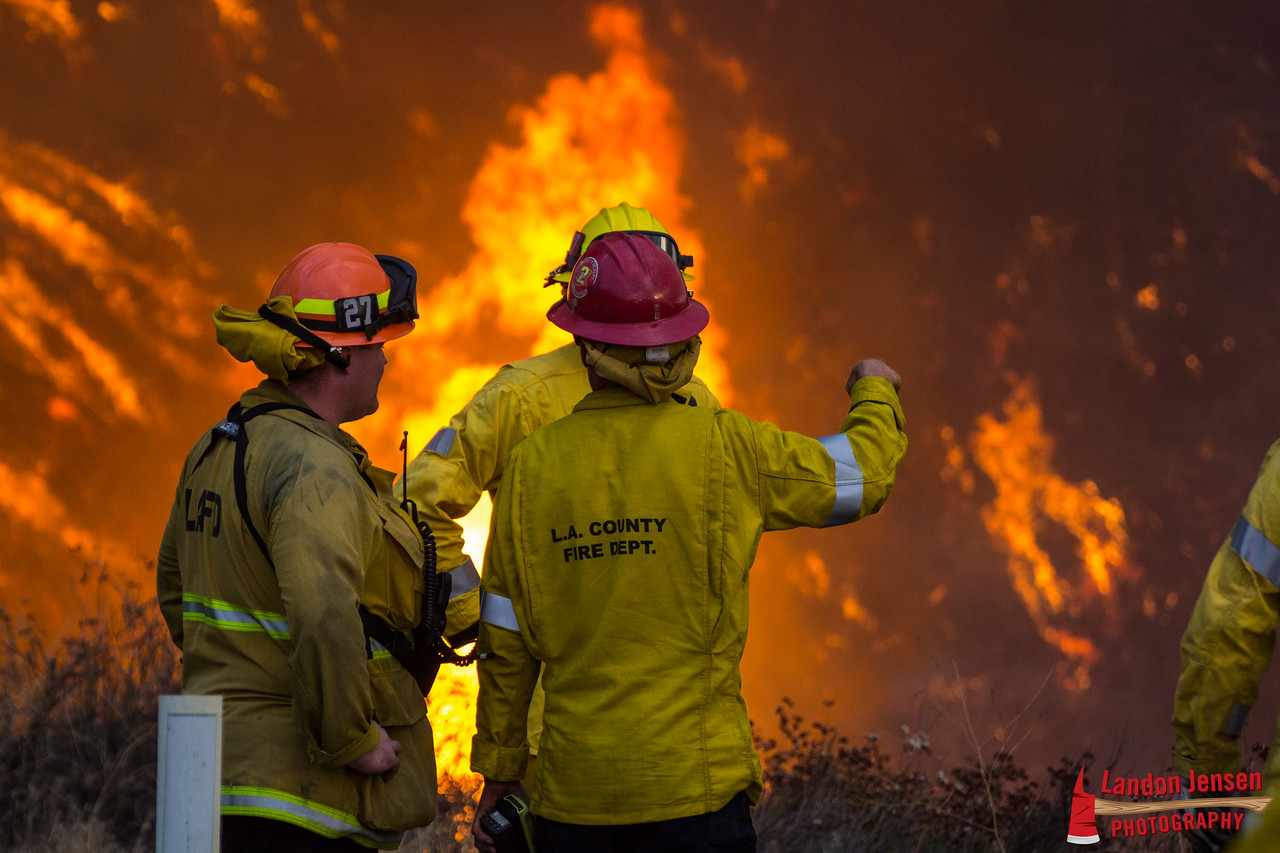
I have witnessed several brush fires over the past couple months go from ¼-acre in light-to-medium fuels to 5–10 acres in minutes, to several hundred acres within an hour or less. Ultimately these fires have turned into large-scale campaign fires burning thousands of acres, destroying hundreds of homes and outbuildings, and even claiming lives.
What’s interesting about these fires is that the rate of spread is equal to—or even greater—than the spread we often see when the Southern California Santa Ana winds fan the flames. As you probably know, here in SoCal we generally experience Santa Ana winds from September through November.
The difference is these fires are spreading just as fast, many times without wind. The fuels and the topography are enough to create explosive fire conditions. Drought, the deceptive role of this past season’s El Nino (which in many places has created more fuel but without substantially relieving drought conditions) and the bark beetle infestation are all contributors to this situation. On Sept. 6th, 2016, Orange County Ca. firefighters fought at Arroyo Trabuco Golf Course that was started when a golf ball hit a rock. This means they were at what is called 100% probability of ignition meaning the tiniest spark can ignite a fire. We’re there!
And that just begs the question: What will the rate of spread look like when we have erratic Santa Ana winds pushing these fires? BEWARE! The rate of spread could be unlike we have ever. We’ve dodged the Santa Ana wind bullet for several years and we likely won’t be so lucky this year.
This is a significant threat not only to the communities and people which we serve, but also to firefighting personnel assigned. We’ve seen burn-overs with injuries recently, and we’ll likely see more if we don’t pay attention and take every proactive measure now.
What are some actions we can take right now?
Train. Review wildland tactics, from structure protection to driving off-road to deploying your fire shelter. If possible, train with neighboring agencies. Wildland fire responses often involve multiple agencies as such fires respect no boundaries.
Revisit your wildland fire policies. Do you know the proper notifications to make as a wildland fire crosses jurisdictions? What are your agency’s policies for operating with firefighting aircraft? Now is a great time to review wildland fire policies department wide.
Create Public Service Announcements. Urge homeowners to do their part to mitigate the threat by creating defensible space and planting fire-resistant plants. Stress the need to follow evacuation orders because what may look benign at the moment will likely become severe in minutes. Even if such orders are technically voluntary—in California there is no law that forces residents to follow an evacuation order—we can stress the thought process that goes into creating evacuation orders and educate homeowners on what to expect if they won’t agree to leave their property.
This fire season has the potential to be unprecedented. We’re already saying that about recent fires—and the Santa Ana winds have not yet begun.
Give some thought now to how you can stay one, two, maybe even three steps ahead of the game. Something tells me we’re gonna need it!
Sam DiGiovanna is a 40-year fire service veteran. He started with the Los Angeles County Fire Department, served as Fire Chief at the Monrovia Fire Department, and currently serves as Chief at the Verdugo Fire Academy in Glendale. He also is Associate Director for the California Training Officers Association and a consultant for www.Lexipol.com